JST Past Papers With Answers – Complete Preparation Guide for Junior Science Teacher Test
Candidates preparing for the Junior Science Teacher (JST) recruitment test should study previous exam papers to understand the exam pattern and important topics. Practicing past papers is one of the most effective ways to prepare for the test conducted through SIBA Testing Services for the School Education & Literacy Department Sindh.
In this article, we will provide:
- Real JST past paper MCQs
- Important topics from the official syllabus
- Section-wise exam pattern
- Preparation tips for the JST test
This guide will help candidates understand the type of questions asked in previous exams and prepare more effectively.
Also Read: JST Official Syllabus and Test Pattern
JST Test Pattern and Structure
According to the official test specifications issued by SIBA Testing Services, the Junior Science Teacher test is designed at the graduation level and consists of multiple-choice questions (MCQs).
| Subject | MCQs Weightage |
|---|---|
| English | 10% |
| General Knowledge | 10% |
| Teaching & Learning Pedagogies | 20% |
| Biology | 12% |
| Chemistry | 12% |
| Physics | 12% |
| Mathematics | Remaining portion |
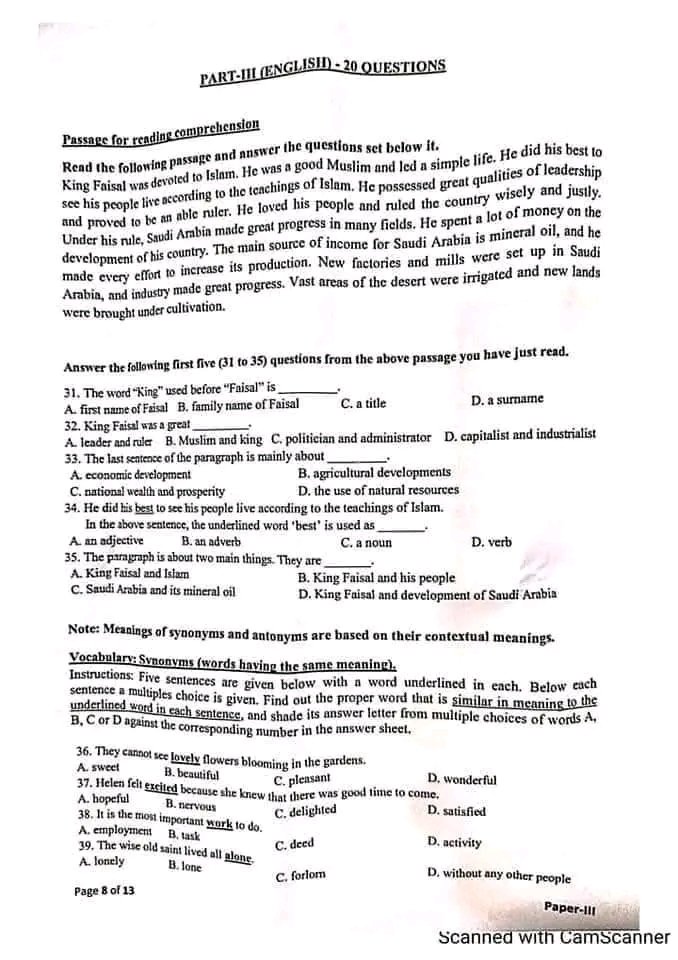
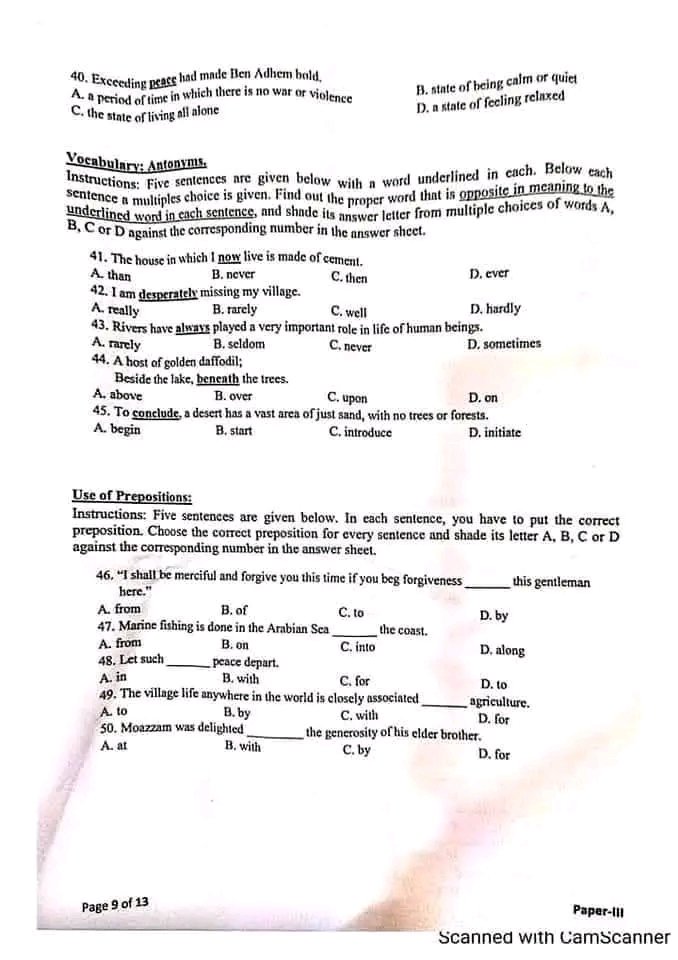
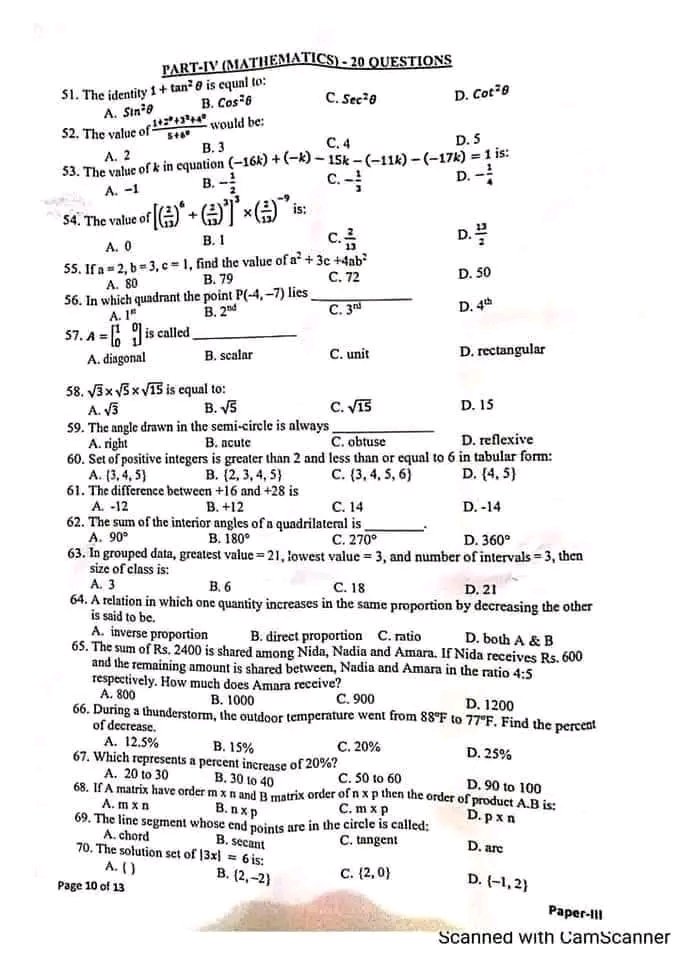
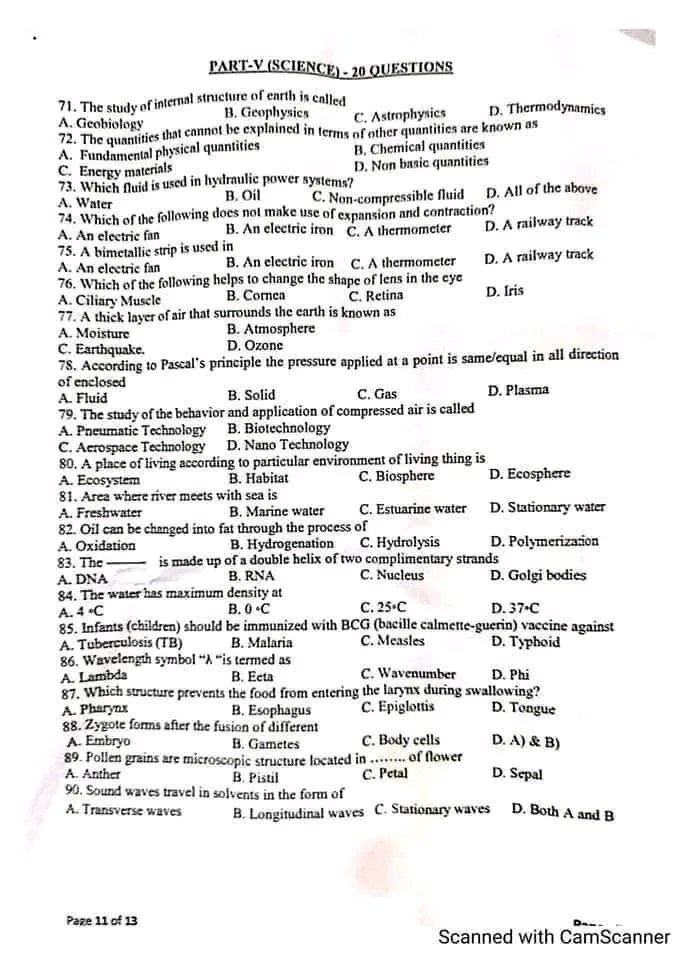
JST Past Paper (Original Exam Image)
Below is an original past paper image from the Junior Science Teacher test.
Important Science MCQs From JST Past Papers
1. The study of internal structure of Earth is called:
- A. Geobiology
- B. Geophysics
- C. Astrophysics
- D. Thermodynamics
Correct Answer: Geophysics
2. The quantities that cannot be explained in terms of other quantities are called:
- A. Fundamental physical quantities
- B. Chemical quantities
- C. Energy materials
- D. Non basic quantities
Correct Answer: Fundamental physical quantities
3. A thick layer of air surrounding the Earth is known as:
- A. Moisture
- B. Atmosphere
- C. Earthquake
- D. Ozone
Correct Answer: Atmosphere
4. Oil can be converted into fat through the process of:
- A. Oxidation
- B. Hydrogenation
- C. Hydrolysis
- D. Polymerization
Correct Answer: Hydrogenation
5. Water has maximum density at:
- A. 4°C
- B. 0°C
- C. 2.5°C
- D. −3°C
Correct Answer: 4°C
Mathematics MCQs From JST Past Papers
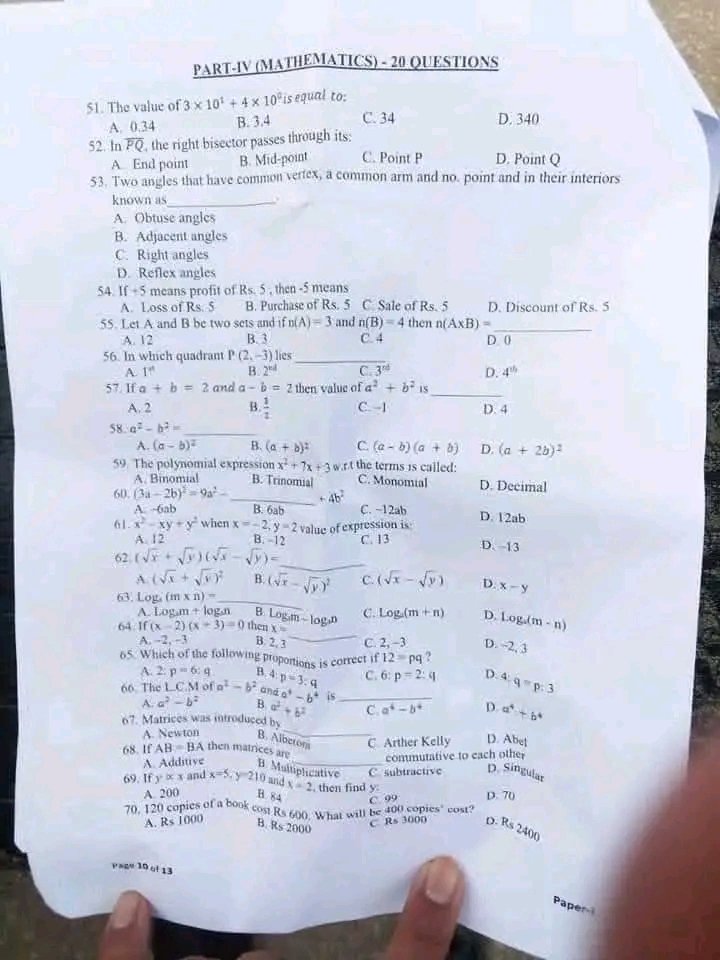
6. The identity 1 + tan²θ is equal to:
- A. Sin²θ
- B. Cos²θ
- C. Sec²θ
- D. Cot²θ
Correct Answer: Sec²θ
7. In which quadrant does the point (-4, -7) lie?
- A. First quadrant
- B. Second quadrant
- C. Third quadrant
- D. Fourth quadrant
Correct Answer: Third quadrant
8. The sum of interior angles of a quadrilateral is:
- A. 90°
- B. 180°
- C. 270°
- D. 360°
Correct Answer: 360°
English MCQs From JST Past Papers
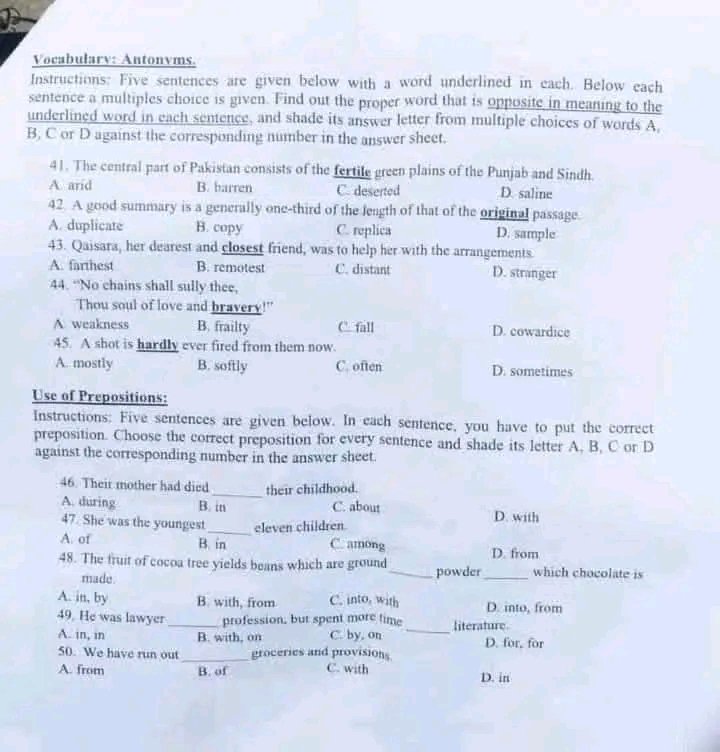
Opposite of the word “Always”:
- A. Rarely
- B. Seldom
- C. Never
- D. Sometimes
Correct Answer: Never
Marine fishing is done in the Arabian Sea ___ the coast.
- A. From
- B. On
- C. Into
- D. Along
Correct Answer: Along
Important Topics From Official JST Syllabus
Biology
- Cell Structure
- Cell Division
- Respiration
- Evolution
- Ecosystem
- Types of Living Organisms
- Enzymes
- Tissues and Organ Systems
Chemistry
- Atomic Structure
- Chemical Bonding
- Periodic Table
- States of Matter
- Thermochemistry
- Environmental Chemistry
- Mole and Molarity Calculations
- Acids and Bases
- Chemical Reactions
- Electrochemistry
Physics
- Mechanics and Laws of Motion
- Gravitation
- Work and Energy
- Waves and Sound
- Electricity and Magnetism
- Atomic Physics
- Light and Optics
- Electronics and Logic Gates
Teaching Pedagogy Topics
- Learning Styles (VARK)
- Teaching Methodologies
- Lesson Planning
- Classroom Management
- Educational Assessment
- ICT Integration in Teaching
- Reflective Teaching Practices
Preparation Tips for JST Test
- Study the official syllabus carefully
- Practice previous JST past papers regularly
- Revise basic science concepts
- Solve MCQs daily to improve speed
- Focus on pedagogy and teaching methodology topics
Final Words
Preparing with JST past papers helps candidates understand the exam pattern and improve their chances of success. By studying previous exam questions and revising important science topics, candidates can perform better in the Junior Science Teacher recruitment test.
Candidates are advised to practice MCQs regularly and follow the official syllabus to prepare effectively for the upcoming JST test.